

Trade Dashboard
Project Type
Product Design
& Development
User Interview, Moderated Usability Testing, Unmoderated Usability Testing, Dashboard Design, Dashboard Development, Data Warehouse Design, User Acceptance Test, User Training
Industry
Agriculture, Wellness, Logistics, Public Policy
Duration
10 months
(3 Phases)
Role
Project Lead
Led a multidisciplinary team of 14, Set Approach & Analysis Framework, Set Project Plan, Give Direction & Feedback, Facilitate Testing & Training Workshops, Present Findings, Client Engagement
Background
The client was a newly established government agency tasked with formulating
a proactive trade strategy for Thailand. There had been attempts to incorporate data into policy decision-making but were not as fruitful as expected. The client engaged us to redesign, develop, and maintain the dashboards and data warehouse.

Project Outcome

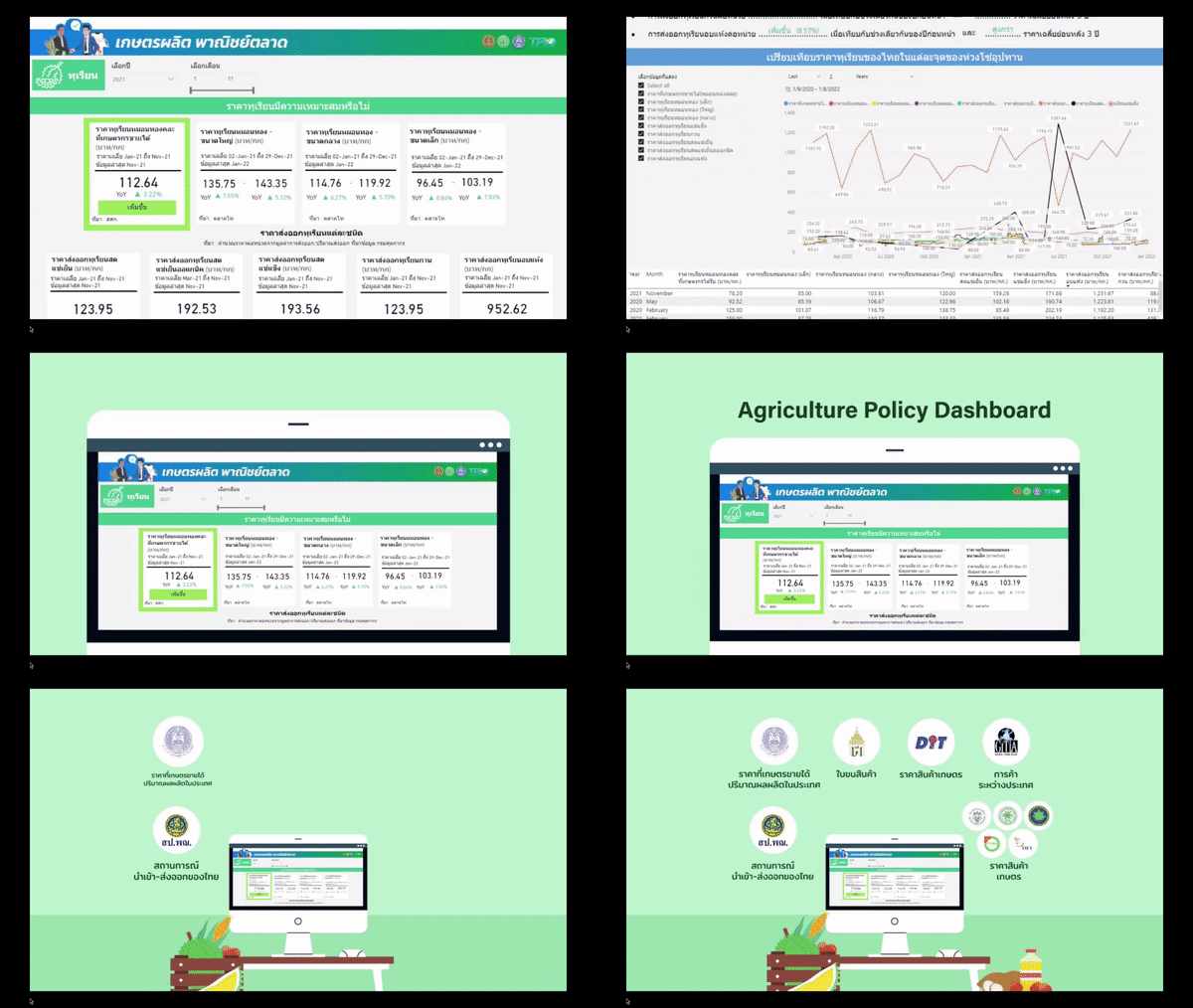
Cross-Agency Data Integration
Data was previously scattered. The dashboards offer an issue-based view as opposed to department-view through 60+ dashboards, 50+ data sources, and 300+ data points
Usage & Awareness
Since launched, we have total usage of 150,000 from both public users and members.
Scaled 4x in 3 years
In 2019, the client started off Agriculture dashboards for 3 key crops (rice, rubber, palm oil) as a pilot initiative. The project continued to receive funding to scale to 8 other dashboards in 2021 - 2022.
Project Goals
-
Analyze stakeholders' expectations toward data usage and obstacles
-
Assess data source readiness
-
Design dashboards
-
Develop dashboards & data warehouse
-
Conduct user acceptance test
-
Conduct user training
Role & Responsibilities
Project Lead. My key responsibilities include:
-
Set project approach and analysis framework
-
Lead a multidisciplinary team of 14 to:
-
Gather user requirement
-
Design dashboard
-
Engage data owner (data source)
-
Develop dashboards and data warehouse
-
Conduct user acceptance test
-
Conduct user training
-
Maintain dashboards
-
-
Engage clients e.g. driving progress update meetings, resolving issues and mitigating risks, managing ad-hoc requests
Process

Given the project's complexity, I will focus this case study on the research & design phase. If you want further details regarding other aspects of this project, please contact pannida.th@gmail.com

Expectation Management
The more the better...?
The client aimed to change the way people make decisions by using data. But since it's not a common practice yet, users of these data often didn't know how they are going to use the data, so they want as much data as possible.
But more data also means more effort spent on the design and the development team which would exceed the scope of the project. To manage the project scope while ensuring quality output, I had to set common goals with the client working team and executives that we are going to develop a strategic decision-making tool, not data visualization. Quality over quantity. And in doing so, our design framework will be based on 4 key aspects:
-
Strategic Needs by conducting user research to understand their goals and obstacles
-
Industry Understanding to understand key objectives and parameters
-
Leading Practices from other industries that utilize data in decision making
-
Technical Feasibility including data availability and system capability

Developing industry understanding, fast.
Developing a decision-making tool requires an understanding of how each industry/ topic works. In this project, we had to build dashboards for 15 domain topics.

What we typically do to understand the ecosystem and dynamism of each domain is to map out the industry value chain - who are the players involved, what are their relations, and who holds the power? For example, to understand the durian industry, we mapped out this value chain

Dashboard Design & Prototype
Requirement Gathering vs Requirement Validation
Gathering requirements is usually tricky as most users don't know what they want and ended up wanting everything. So instead, we created a quick prototype of every dashboard and presented them to users and stakeholders to speed up the process, asked them to validate and feedback, then revised the design instead of spending hours gathering requirements.

